Cello Alone
One instrument, three bows, many voices
SOLO CELLO / VOICE / ELECTRONICS
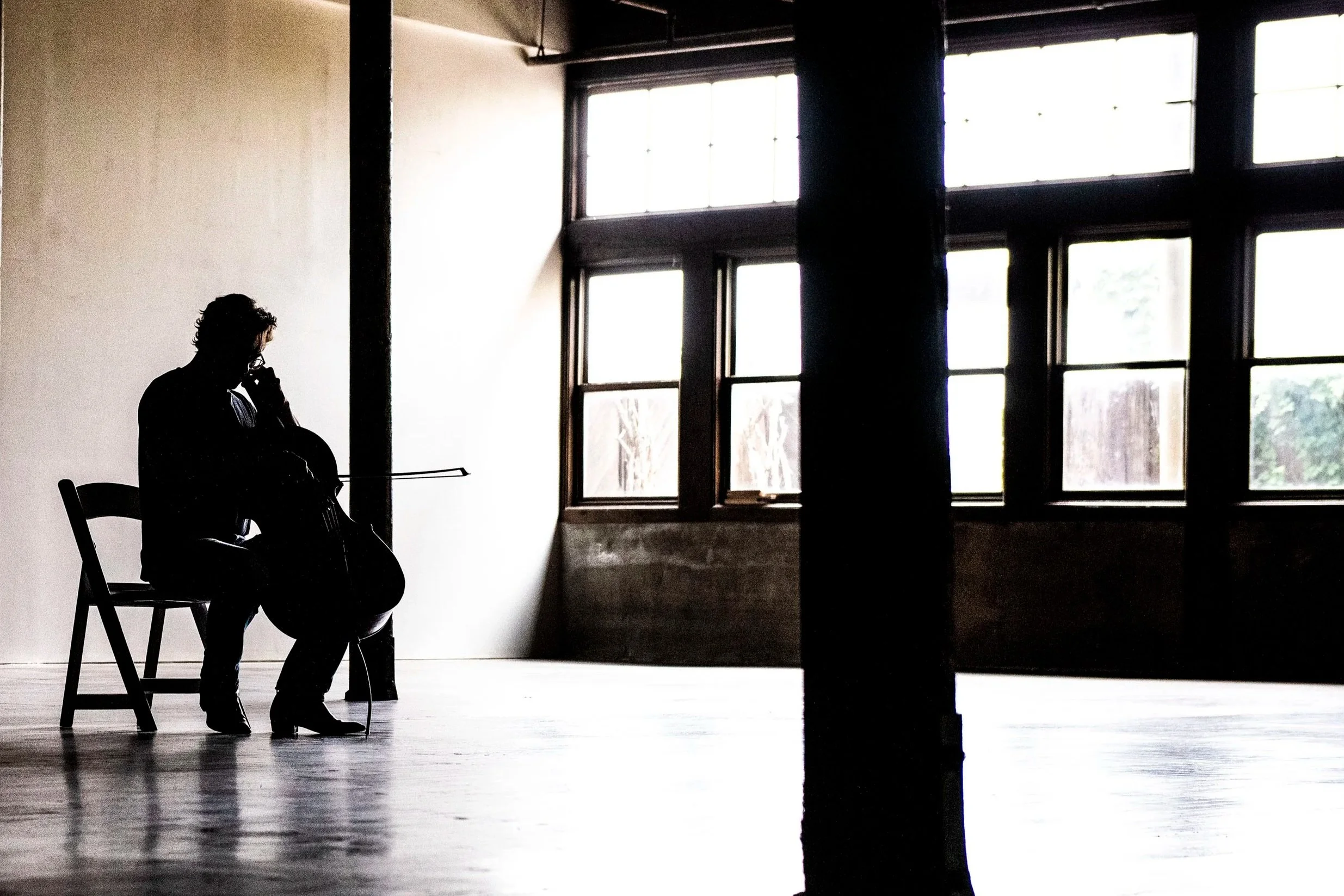
Cello Alone is a musical journey across centuries, cultures, and continents. Beginning in Dante's medieval vision of the afterlife, the program moves through the musical traditions of Europe and beyond, tracing the changing language of the cello from the Baroque era to the present day.
Three different bows — Baroque, Classical, and modern — reveal something of this evolution. Each brings its own character to the instrument, shaping articulation, phrasing, and the relationship between sound and silence. The cello becomes a means of exploring not only different styles of music, but different ways of hearing and expressing the world.
Perhaps most intriguing are the connections between traditions that appear, at first, to be distant from one another. The rhythmic vitality, dance forms, and improvisatory spirit of Baroque music find unexpected echoes in American bluegrass, Appalachian fiddle music, and country traditions. What seems separated by centuries and geography can reveal a remarkably close musical kinship.
Moving between ancient and modern, sacred and secular, composed and traditional music, Cello Alone invites the listener to encounter the familiar in unfamiliar ways — and to discover how a single instrument can carry so many different voices.