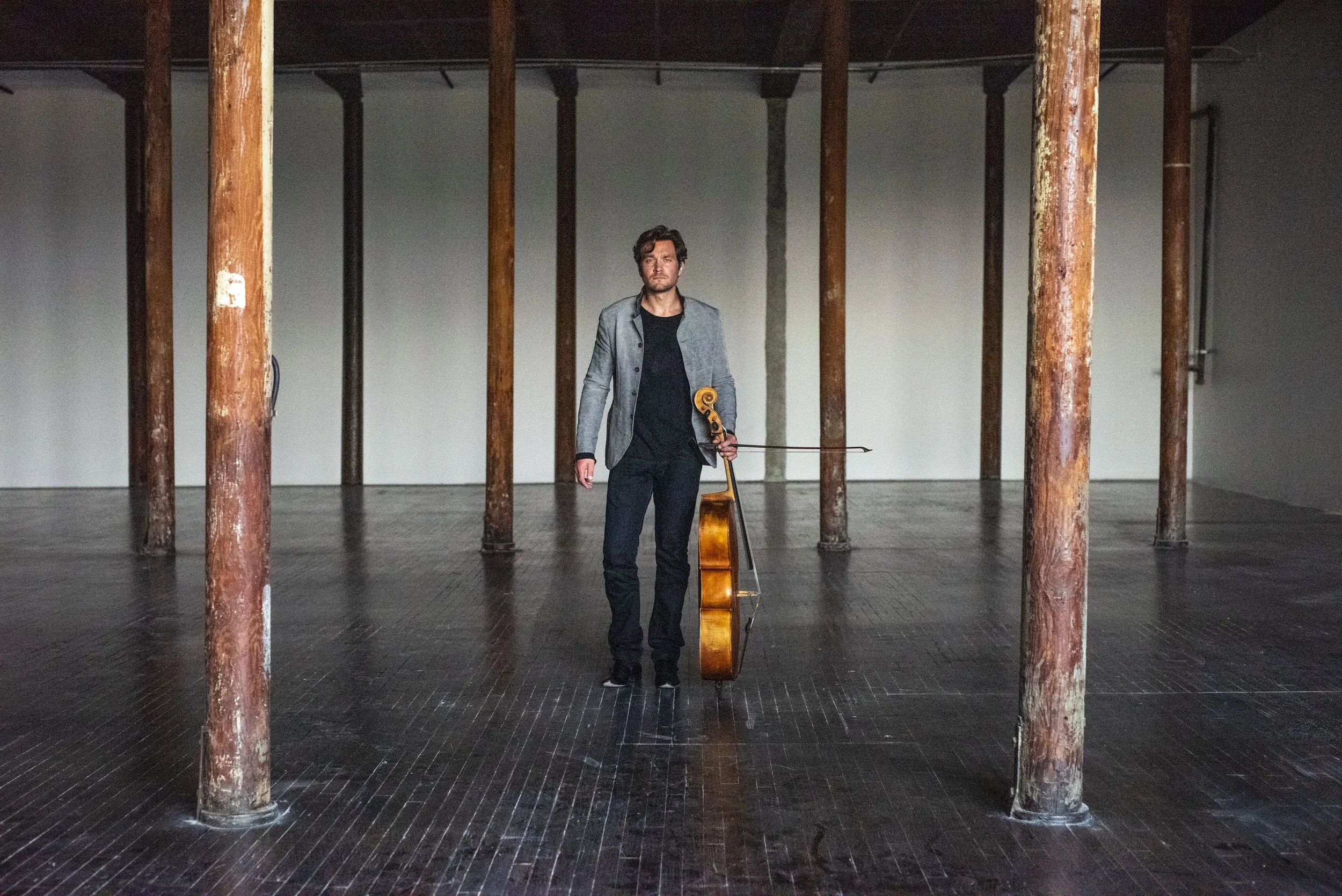
Joseph Kuipers
CELLIST · EDUCATOR · CREATIVE DIRECTOR
01 / THE BEGINNING
A life shaped by music.
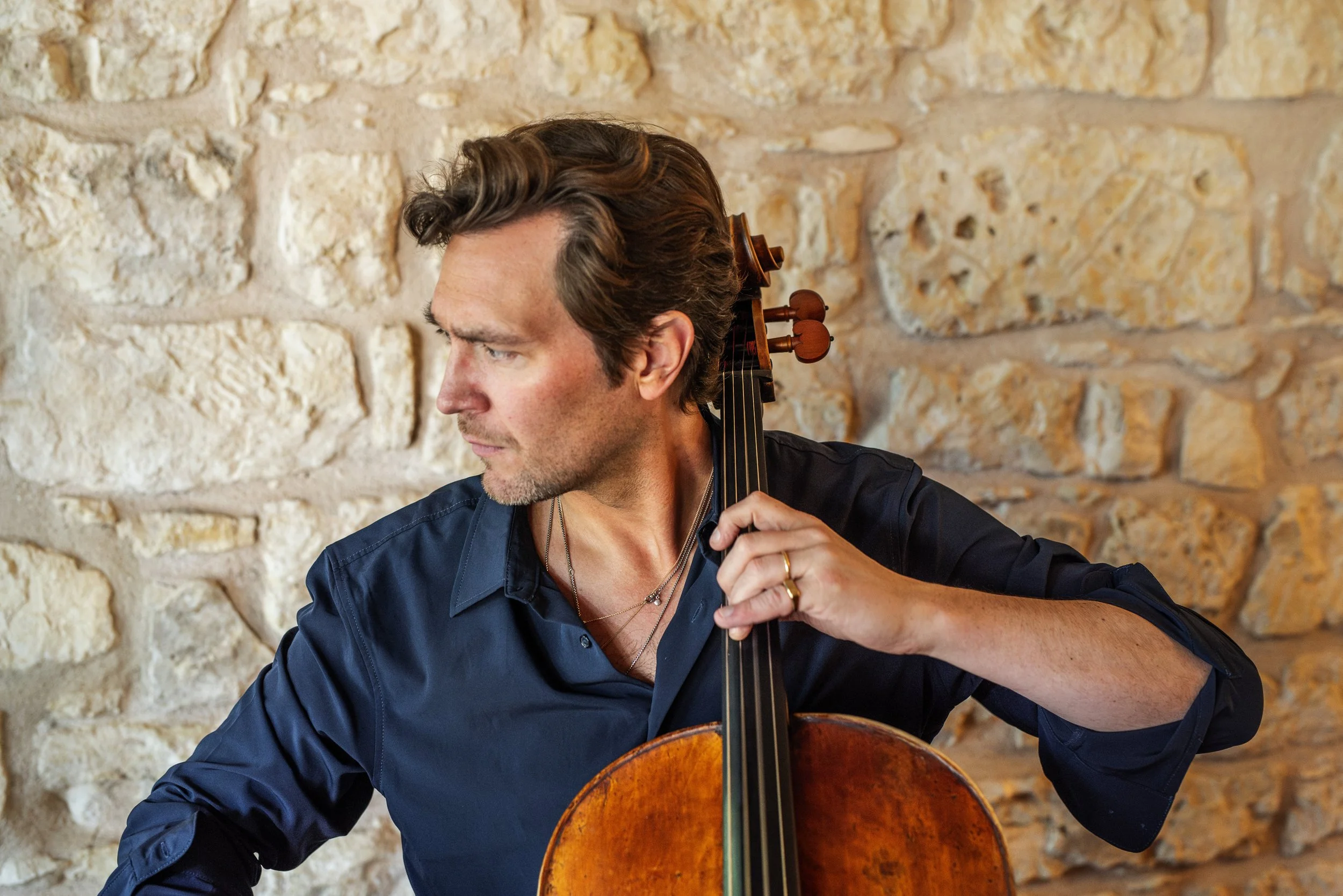
Q: Why did you pick the cello?
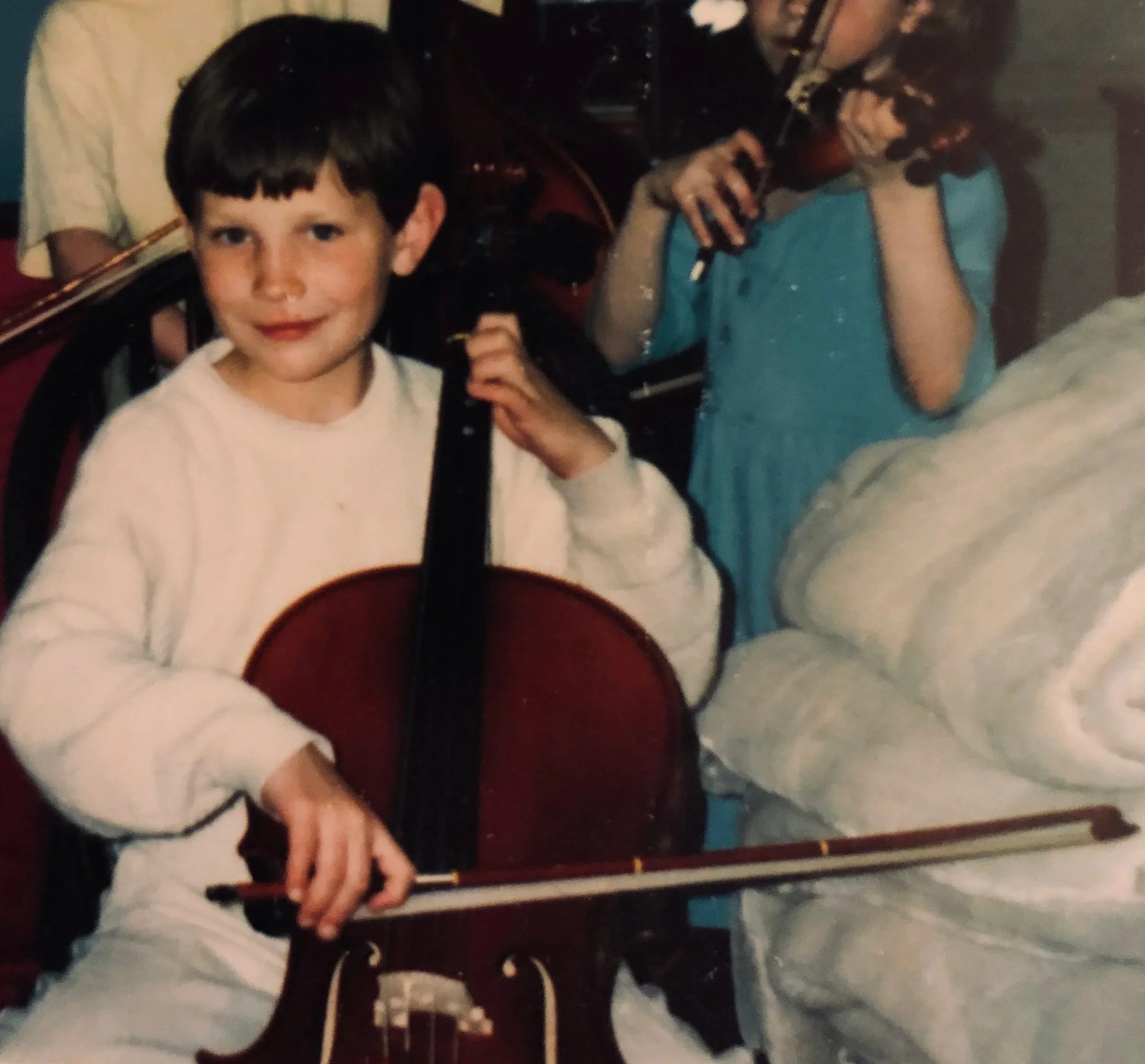
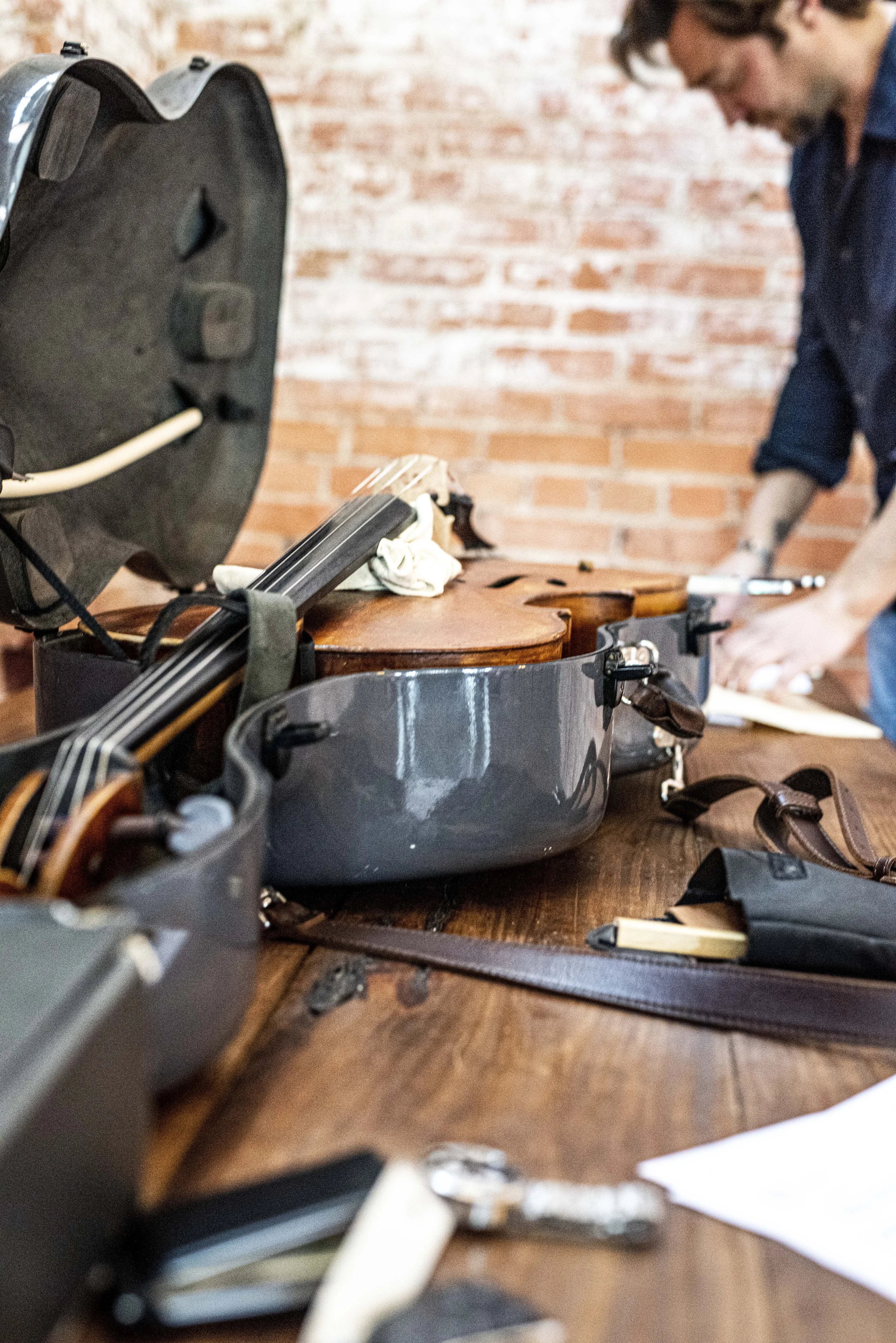
A: The sound of course..! Although I must admit my earliest memory of the cello is an old black and white photograph of my grandfather Percival Harding with his cello, and it’s appearance simply attracted me. There is something so human about the sound of the cello. The range encompasses the rich dark tones of a bass, through sensuous tenor and alto range, up to the soaring heights of a soprano. I just felt drawn to it, and still have an immediate closeness to everything about the cello.
I grew up in Minnesota, where singing in choirs was a common part of life — rooted in Scandinavian traditions. From an early age, I was surrounded by music making with others, both through singing and chamber music. Those experiences shaped the way I listen and influenced the collaborative approach I now take in organizing projects.
02 / THE FORMATION
Learning to listen.
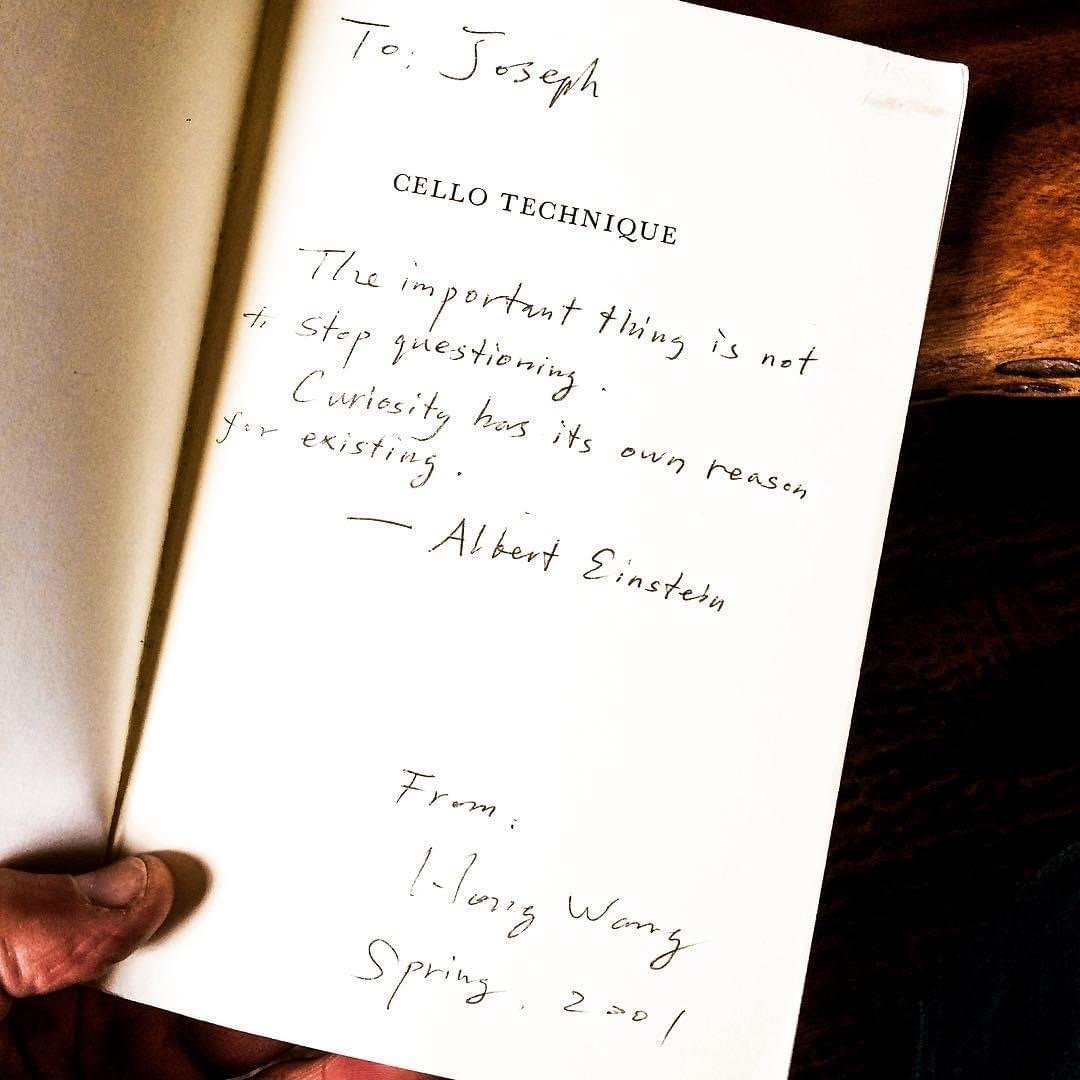
Q: Your first cello teacher was Hong Wang?
A: Yes, he is a wonderful musician, cellist, and teacher. I had only played the cello for two years before I met him so I consider him to be my first major teacher. He stressed the importance of technical basics, organisation, and bow distribution, as well as inspiring in me a sense of curiosity.
You also studied with Paul Katz, cellist of the Cleveland Quartet?
I studied with him for four years in Boston. He was very inspiring when it came to the production of a beautiful sound, resonance and textures- which of course start with listening! But he also stressed the importance of the fundamental habits of cello technique, and of listening to your body. I’ll never forget something he said during a lesson-
Thinking can be dangerous, but necessary..
And over the summers you worked with Richard Aaron at the Aspen Music Festival?
Yes! that was both wonderful and frustrating to go back and forth between two very strong, and different personalities. Richard Aaron impressed on me the importance of scales, etudes, and exercises, he was incredibly gifted at explaining cello technique, a true pedagogue! In fact, his approach to teaching has certainly inspired many things in my own.
Then you moved to Germany to study with Michael Flaksman?
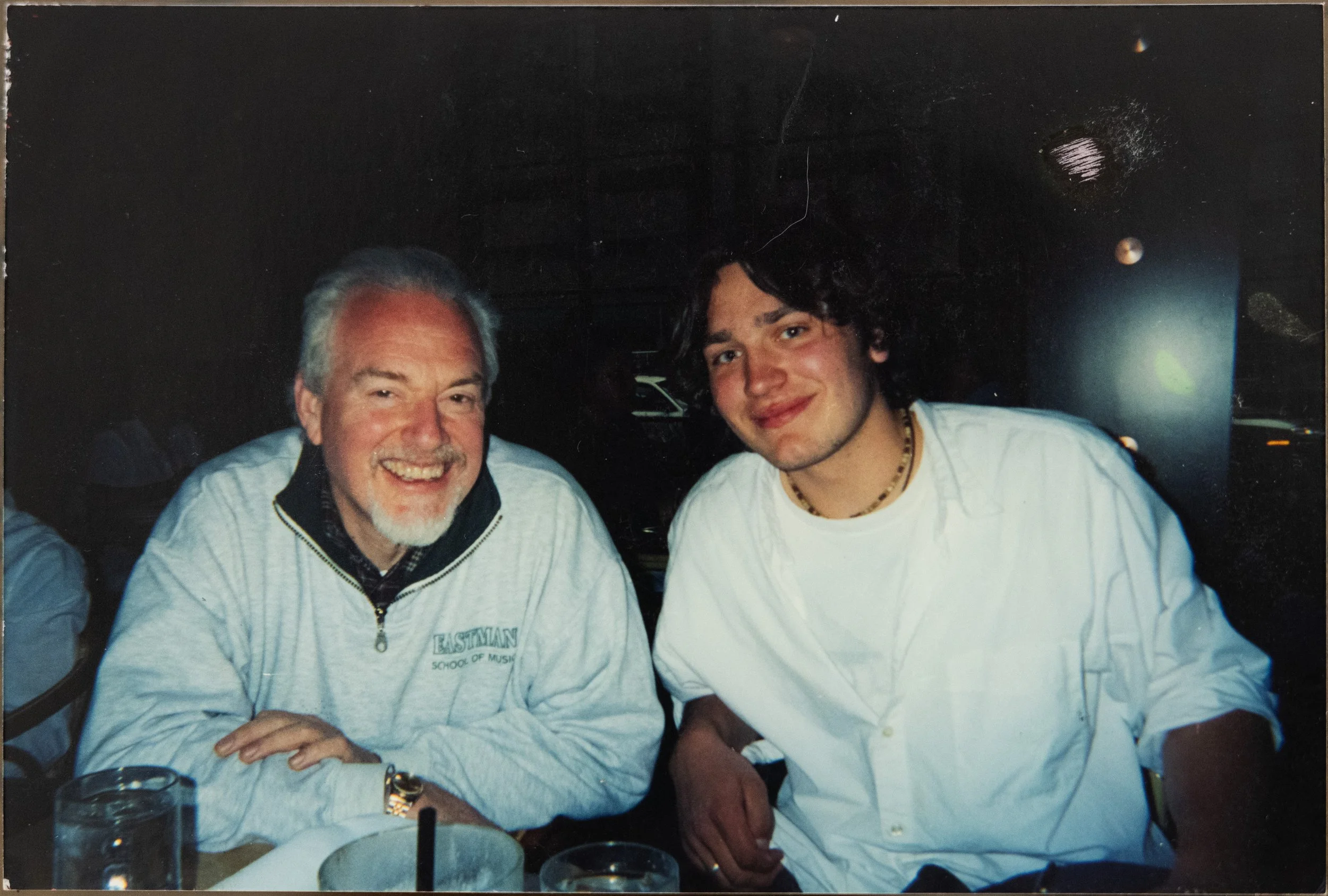
Michael Flaksman spent a lot of time with me on refining musical details, and encouraging me to develop a more individual ‘voice’. I’ll never forget the way he demonstrated certain passages; his sound was just wonderful -— always developing, warm, and incredibly beautiful. He was very particular about creative uses of vibrato and tone colors and making sure that the vibrato and bow speed fit the character of the music.
During your time in Germany you worked with Bernard Greenhouse?
Greenhouse was one of my most demanding teachers, and ultimately one of the most influential. He was very direct. I remember him telling me that I had a beautiful sound, but that I would sometimes drop the tension of the musical line. That observation has stayed with me ever since, and has become central to the way I think about music — particularly voice leading, and the idea of music as a kind of suspension of gravity.
He was also very particular about vibrato, that it should always be developing, always going somewhere. We worked a great deal on left-hand articulation, on how to make the music speak rather than simply produce beautiful sounds. There was a constant relationship between speaking and singing, between the articulation of a phrase and the direction of the musical line. These are things I still think about almost every day when I play or teach.
And you finished your studies with Thomas Demenga in Switzerland?
Since first hearing his brilliant recordings of the Bach Cello Suites paired with modern works, I had always wanted to study with him. My lessons with him presented both the wonderful inspiration of his demonstrations, as he was, and still is, a very active performer; and his fresh innovative approach to music. I remember my first lesson- coming to him with the Elgar Concerto, and specifically for help with my sautillé in the second movement. I had already performed the Elgar Cello Concerto and Rococo Variations many times but I still struggled with that stroke. He recognized immediately that I used too large a movement in my upper arm, which was preventing the natural spring of the bow from working for me. After he explained what I needed to do in just a few sentences, he gave me a wonderful prescription to work on for a week, and I suddenly had a good sautillé. He is uniquely gifted when it comes to understanding intricate technical matters, and in connecting them to the musical gesture.
He also impressed on me a very different definition of what technique is. That true technique is, to paraphrase him..
The ability to create a specific musical expression.
He taught me that after a certain point music is technique- and you can’t simply separate the music from the technique in order to ‘master’ technical skills.
He also emphasized the importance of the score, and of different musical styles. While studying at the Music Academy of Basel, I was exposed to the musicians of the Schola Cantorum Basiliensis, one of the best early music schools in the world, which inspired me to begin experimenting with early music, a baroque bow, gut strings and tuning down to A’415.. Suddenly so many of the questions I had had regarding the music of Bach began to resolve themselves, and the spoken, articulated nature of the music came alive to me.
03 / THE CREATION
The map on the wall.
Texas Cellos, Fredericksburg Festival, building institutions
Q: Texas Cellos was founded in 2020, but you have said that the idea actually began much earlier. Where did it start?
A: It was a cold winter night in Minnesota, about ten years before Texas Cellos actually began. I was staying at my parents’ home over winter break after my studies in Europe. The home is in the country, and there was quite a bit of snow on the ground. I remember looking out the window and seeing perhaps two feet of snow piled against it. Every so often I would go upstairs and put another log on the fire for my grandfather Hans, who enjoyed the warmth.
During my studies in Basel, I had begun to notice that certain musicians with a particular approach to music making seemed to find one another—on recordings, particularly on the ECM label founded by Manfred Eicher —through festivals, through teachers and other musicians. I loved the idealism of Manfred Eicher and his very defined fingerprint in sound.
That night in Minnesota I went over to a corkboard on the wall and began sketching connections around the idea of a musical ensemble. Before long, the corkboard was full.
I also make visual art, so I found a large drawing pad and began taping sheets of paper to the wall. The drawing kept expanding.
It started to look something like a family tree: branches, siblings and descendants. There was a rotating ensemble, a concert series, a festival and eventually a recording label that would document the music made.
I wasn't really drawing an organization. Looking back, I think I was drawing a network through which an artistic culture could grow.
Did anything immediately come from that map?
My sister Rachel and I started the Marinus Ensemble, and I am very happy that it has grown into a wonderful organization and concert series of its own.
But then life happened.
I moved to Texas and, somewhat unexpectedly, spent several years working in marketing. I had actually moved to Texas intending to start a marketing business rather than pursue a conventional musical career. In retrospect, that experience became enormously useful when I eventually began building Texas Cellos.
Through my friend Alex McDonald, who was a classmate at New England Conservatory, I became connected with the teaching ecosystem around North Dallas and Plano. Several teachers became unavailable around the same time, and suddenly I was essentially handed a class of more than 90 students.
Many were beginners or ordinary young students—not the highly selected conservatory-level musicians I had been accustomed to working with as an assistant to my own professor.
I dove into teaching and freelancing, and the big plans from Minnesota went onto the back burner.
So what changed in 2020?
Like many people, I suddenly had a lot of time on my hands.
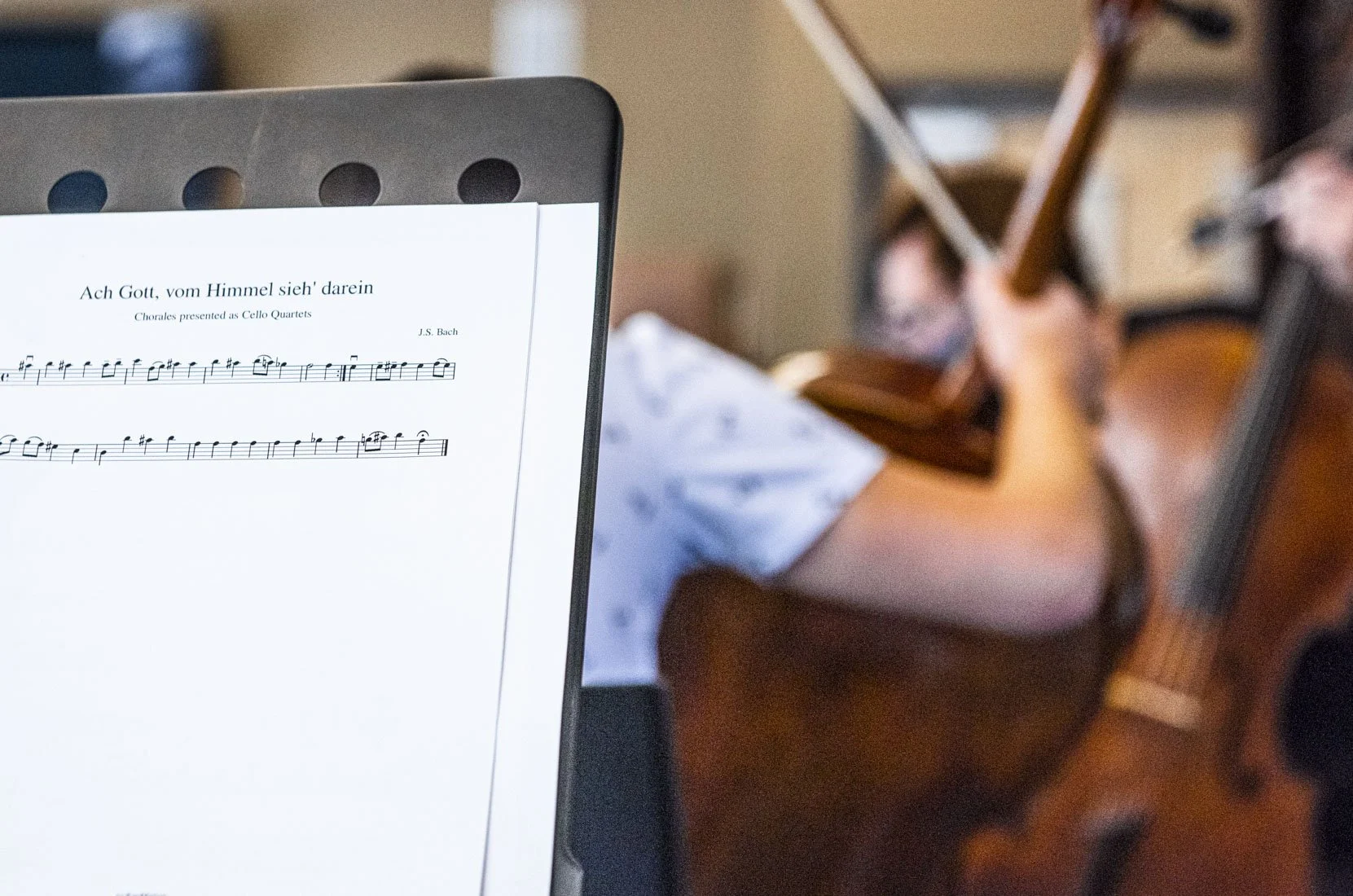
In 2019 I had ended a studio recital by putting approximately 25 of my students together as a cello choir. So when COVID arrived and orchestras began trying to rehearse online, I was teaching a longtime student one day and realized that Zoom orchestra rehearsals were potentially a disaster waiting to happen.
I thought: why not start a cello choir?
At the same time, I was asking myself a larger question: If I really went for it—if I didn't hesitate or commit halfway—what is the greatest good I could aim for?
I had always been a very creative person and tended to see possibility everywhere, but reality doesn't always line up with imagination. There was fear of failure, fear of the unknown, fear of making a fool of myself, fear that nobody would attend or support what I wanted to do.
So this was initially very practical. I made a simple electronic flyer, threw together a website in a couple of days and posted it online. I probably hoped that half of my own students would sign up.
Instead, 33 students from around the Dallas–Fort Worth area joined us.
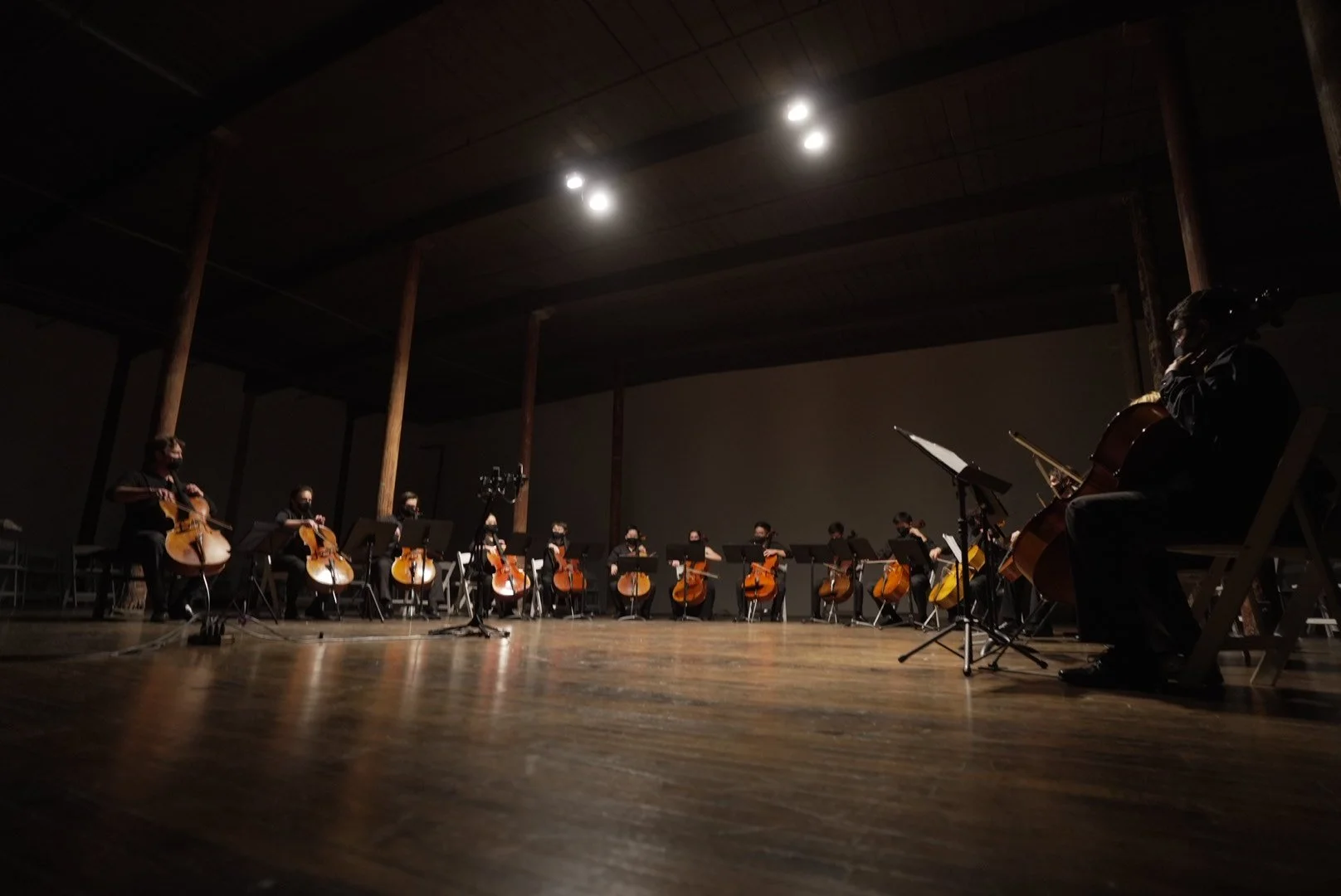
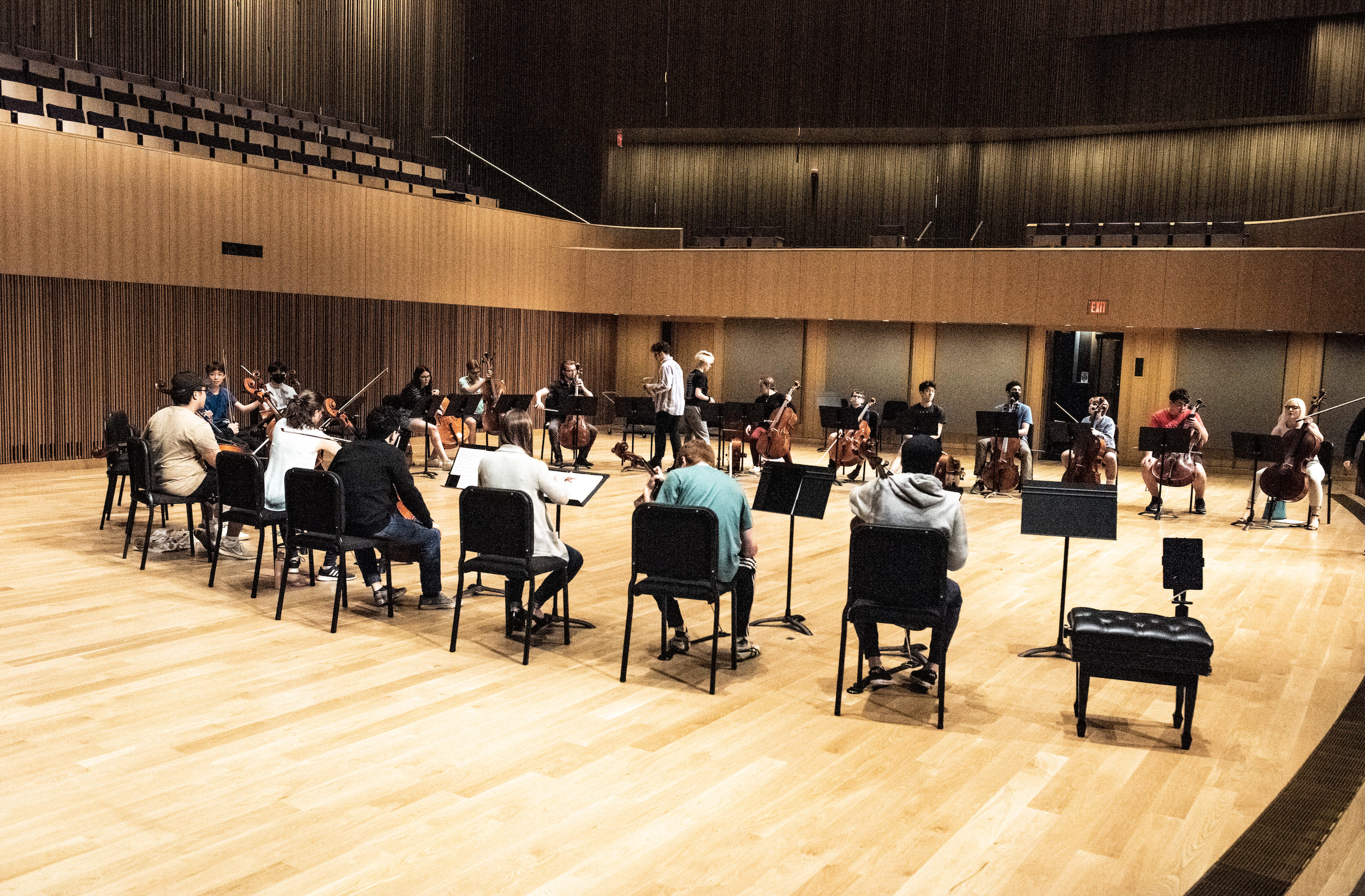
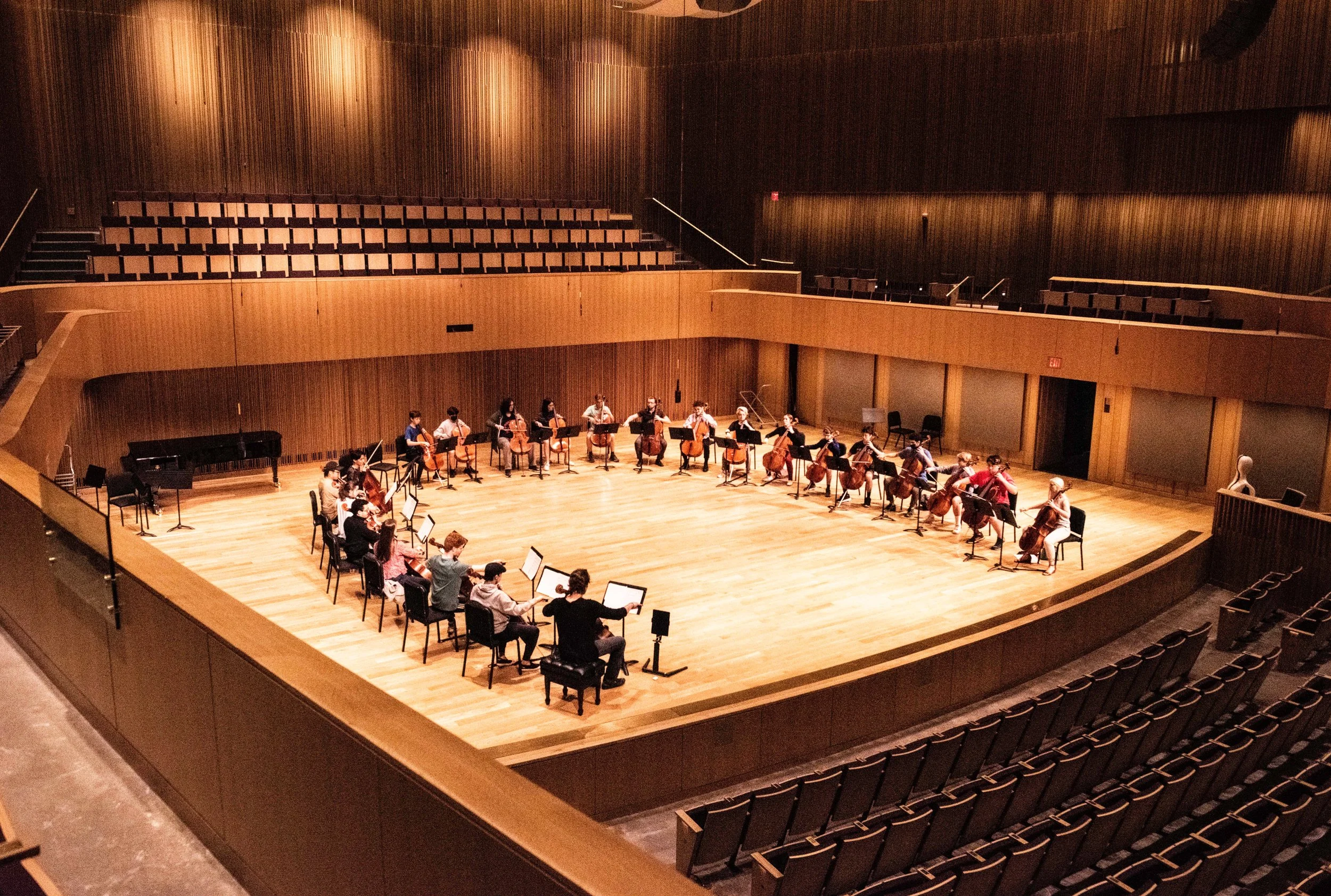
We began rehearsing on Sunday mornings in the fall of 2020, socially distanced.
It was very much a cello choir created to get people through COVID.
When did it become “Texas Cellos”?
Those 33 students generated about $11,000 in tuition, and I decided to start a nonprofit.
There aren't many models for cello choirs, so I played around with a number of names. I thought about the Yale Cellos and realized that “Texas Cellos” had a good ring to it.
Originally there were two ensembles beneath that umbrella, #CELLOCHOIR and #CELLOSOUND. The participants probably thought of Texas Cellos primarily as an ensemble, but because we incorporated as a nonprofit, it was simultaneously becoming an organization.
And something else had already happened.
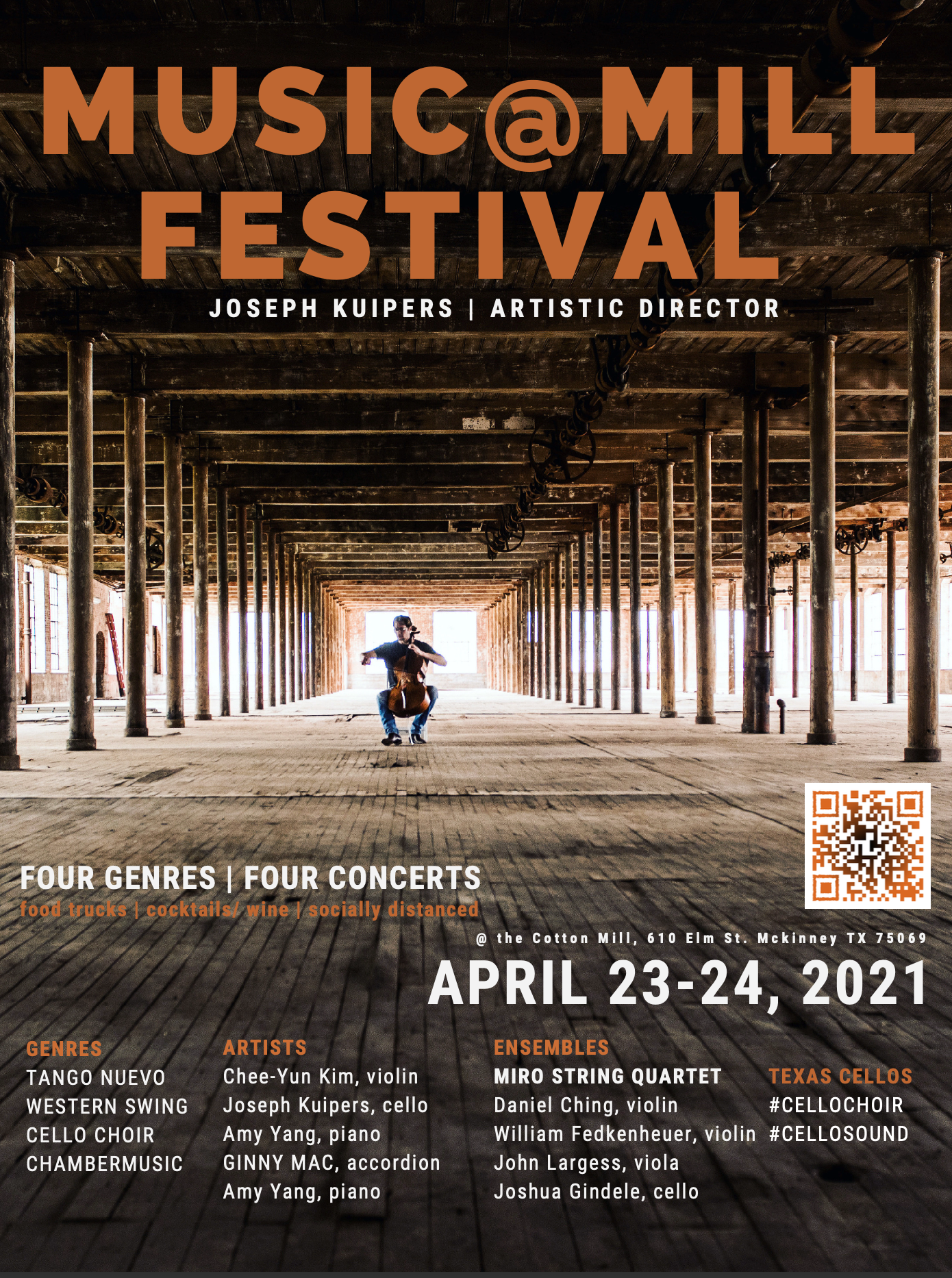
During the summer of 2020, I had been exploring and stumbled across an extraordinary old cotton mill in McKinney, Texas. I made a solo recording there. While walking around the property, I met the owner, an older gentleman, and we began talking.
Before I left, I reserved April 23 and 24, 2021.
I was going to present a music festival.
That seems like an enormous jump—from a socially distanced student cello choir to a festival.
It was.
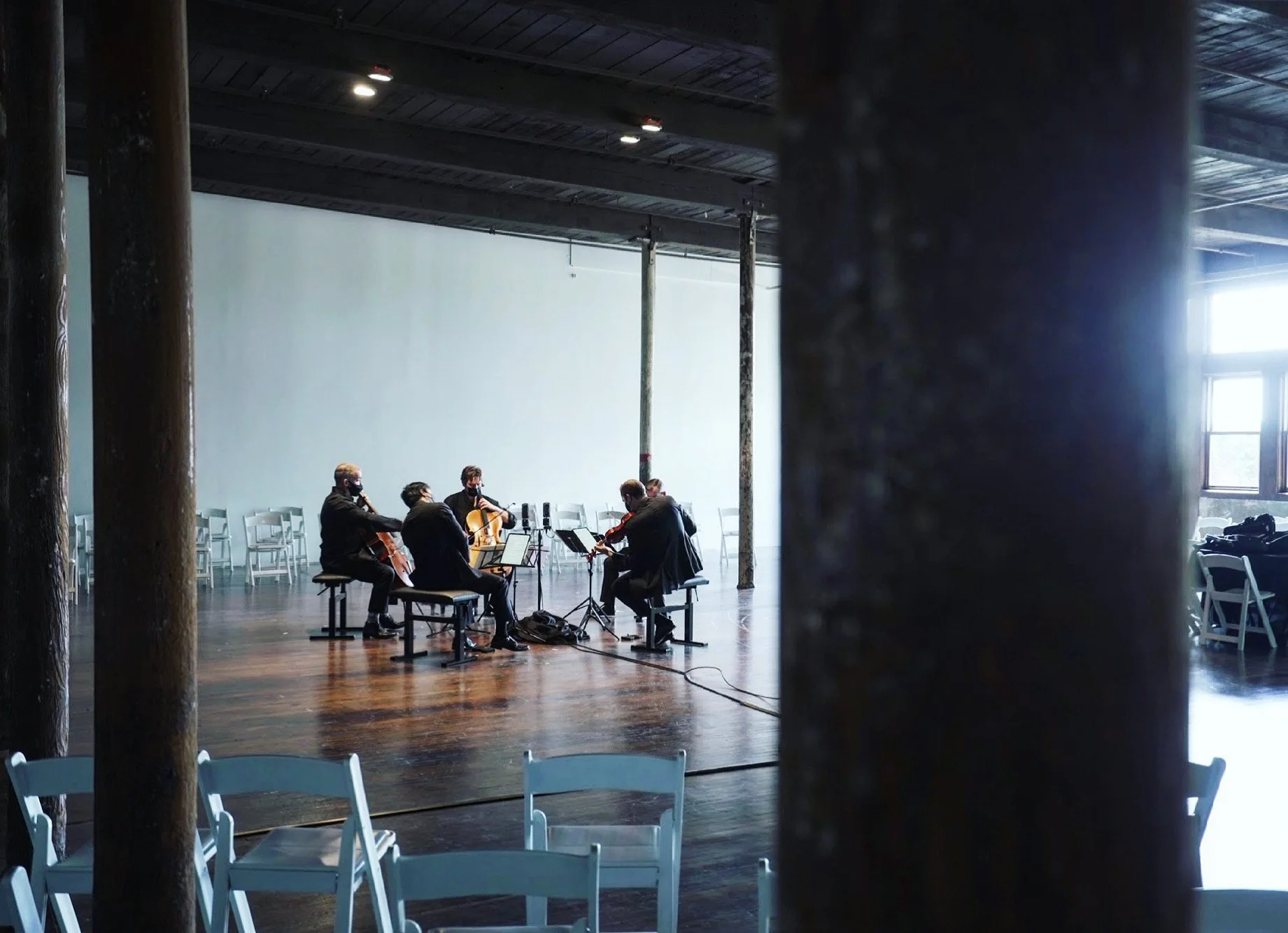
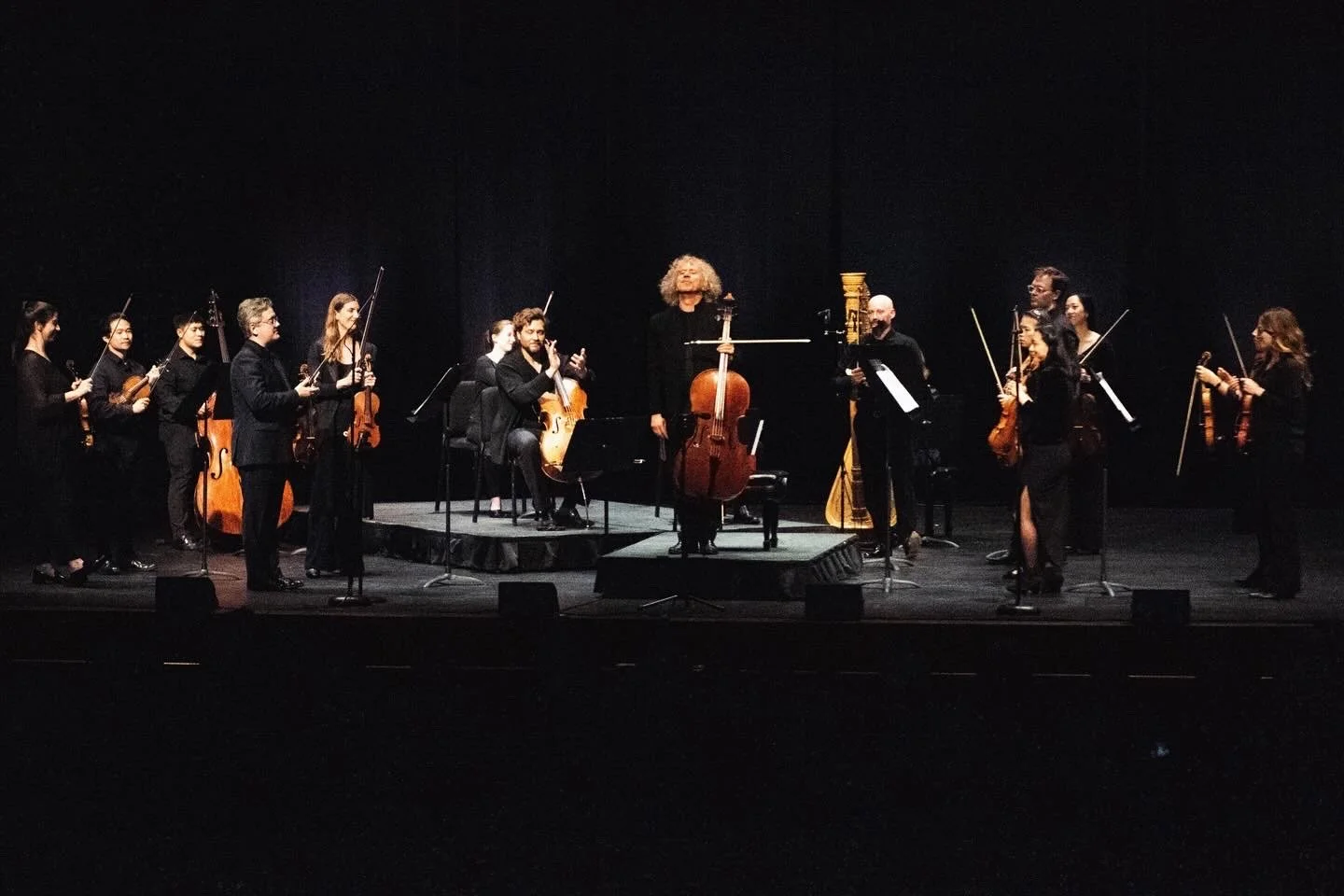
About six weeks before the festival, I had all the venues reserved and a contract with a string quartet to perform cello quintets with me. And I remember asking myself: Am I actually going to go through with this?
Could we afford it? Did I have the bandwidth?
Finally I decided simply to take the dive.
I performed in all four concerts. I also wrote the program notes, did the marketing, ticketing, paperwork, finances, interviews and practically everything else. There were many volunteers helping, for whom I remain eternally grateful, but it was an enormous amount of stress.
And I could see the ticket sales coming in. We needed those sales to pay for the venue and the musicians.
So when people actually came, there was incredible relief—but also incredible joy.
Several priests from my church attended concerts that weekend. I still remember walking into church on Sunday morning after our final Saturday-night concert and seeing the smile of one of them.
It was one of those tiny moments that stays with you.
The first festival used the phrase “music that gives you a heartbeat.” What did you mean by that?
The music industry isn't a particularly good business model. Margins are small, and idealistic music making is not always practical. Because of that, music itself can become compromised by limitations of time, money, energy and attention. Concerts can sometimes simply become boring.
I wanted to go in the opposite direction.
“Music that gives you a heartbeat” meant emotional connection. I believe very strongly in a culture of service to the music—learning to express something about the human condition in a way that speaks directly from the heart.
I wanted to present the highest-level musicians we possibly could, performing beautiful programs in spaces and formats where people actually wanted to be.
And those four concerts received remarkable publicity because live music was only just beginning to return at the end of the pandemic. There was this extraordinary hunger—from students, colleagues and audiences.
People wanted music again.
And shortly afterward you received an unexpected telephone call.
Yes. That is one of the moments I will never forget.
In May 2021, I was in North Carolina on the beach with my large family when my phone rang. It was incredibly windy, so I had to walk away from the beach just to hear the woman speaking.
She was calling from Bank of America.
She explained that a trustee of a foundation had read our story in The Dallas Morning News and wanted to support Texas Cellos. I believe the gift was $5,000.
I was elated. Joyful. Hopeful.
The whole thing felt almost like a fairy tale or a Cinderella story.
Someone completely outside of our immediate circle had seen what we were doing and decided that it mattered enough to support.
Coming immediately after that first festival, and right at the end of the pandemic, it gave me this tremendous sense of the joy of possibility.
I think that was when the possibilities began to become tangible in my mind.
When did education become central to the organization?
That evolved through my own experience.
My career wasn't particularly conventional. I studied in Boston, then Germany, then Switzerland. Those sound like exotic places, but when you move around that much you don't necessarily develop many lasting professional connections.
Then I spent years teaching one-on-one.
That gave me a firsthand understanding of what actually happens when a young person learns to play an instrument: the frustration of not being taught well, lack of technique, lack of enthusiasm or inspiration, poor repertoire choices—but also the extraordinary transformation that can happen when something begins to work.
So much of our programming grows out of the actual work of learning to play the cello.
You take the seed of an idea. You teach a student how to make a beautiful sound. Then how to shift. How to play in tune. The principles of phrasing.
And eventually, at the other end of that enormous process, that person walks onto a stage and is capable of expressing some deep beauty or perspective on the human condition.
In some ways, I think I personally needed to pass through all of these roles. Student. Performer. Marketer. Recruiter. Private teacher. Organizer.
I needed to know them from the inside.
Was there something you felt music education was getting wrong?
One thought became increasingly important to me.
We don't need to “save” classical music because it is somehow dying.
We just need to show people the real thing, and they will love it.
If young musicians encounter extraordinary playing, extraordinary teaching and extraordinary music—not as something distant, but close enough that they can participate in it—I think they respond naturally.
That became one of the defining aspects of our programs.
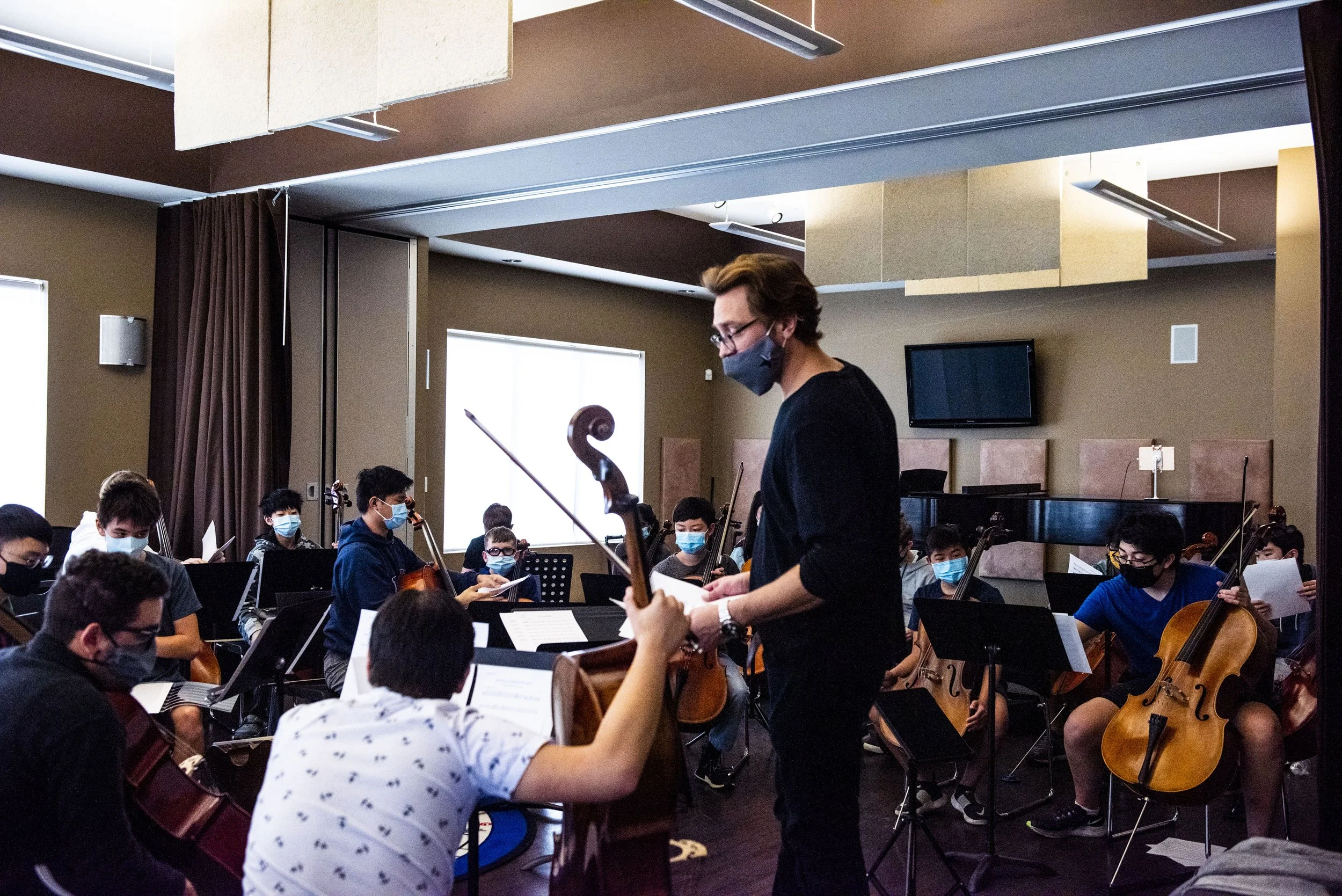
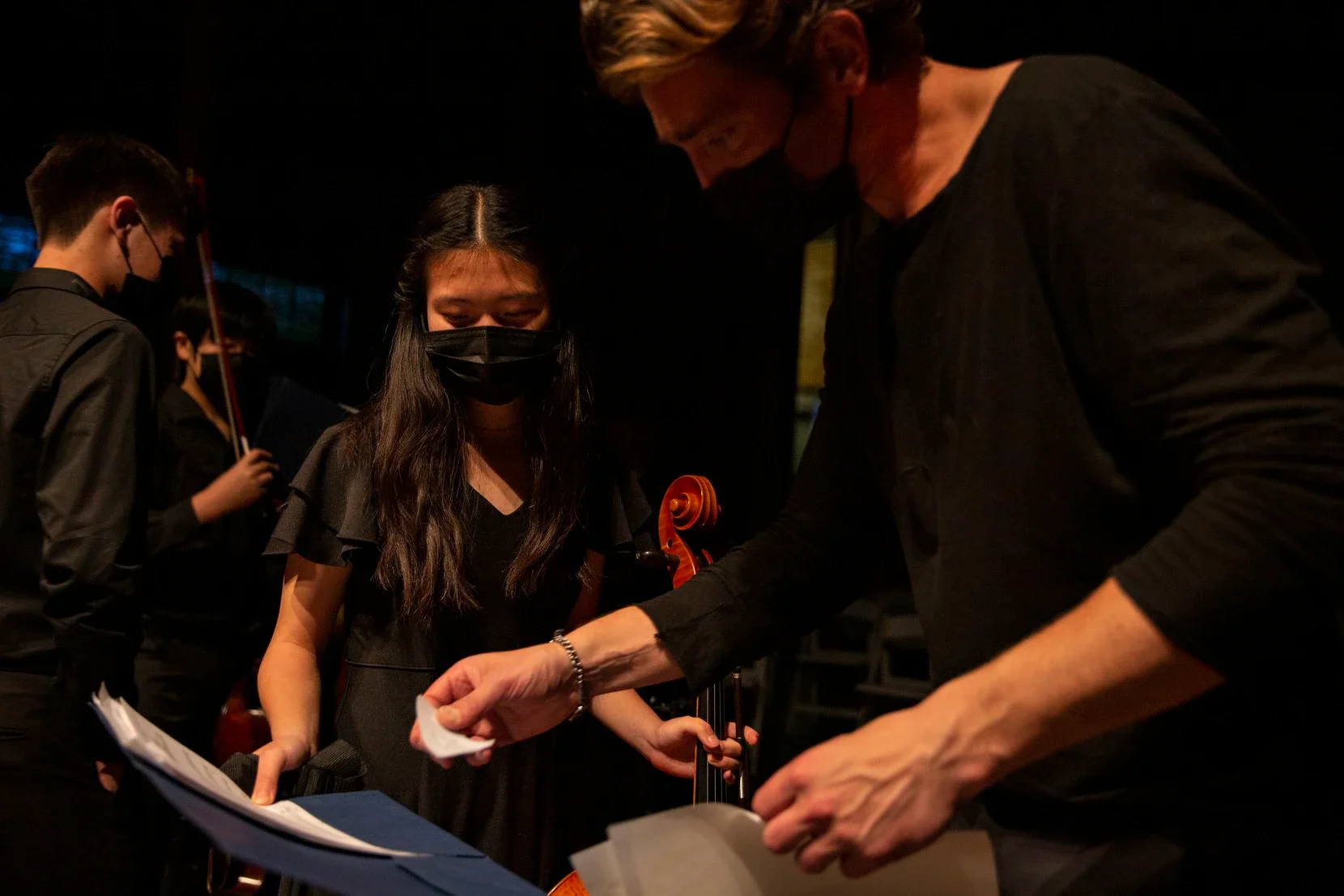
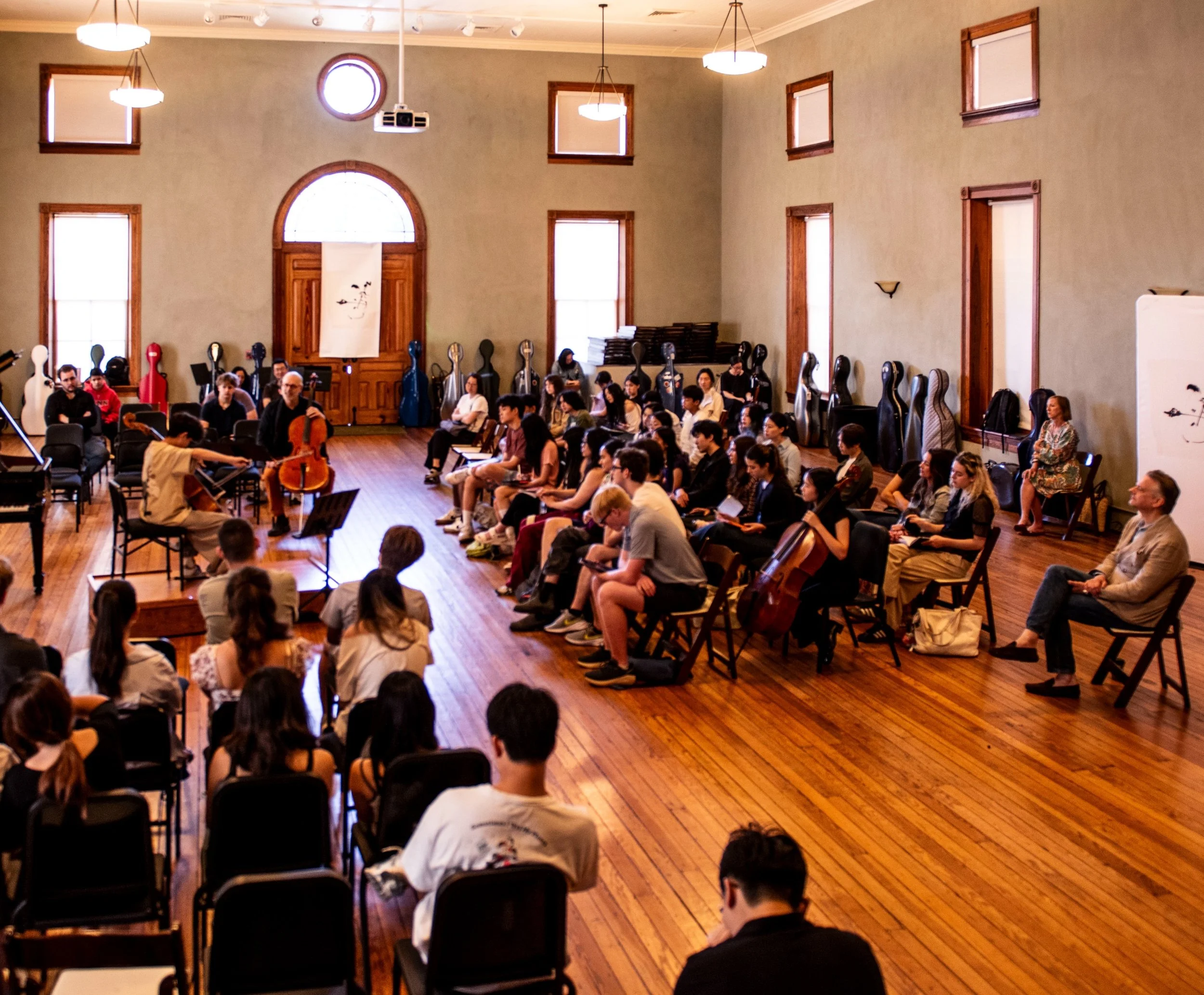
The amount of interaction between senior artists and students is unusual. The artists don't simply arrive, teach a class and disappear. There are conversations. There is proximity. And in our side-by-side cello choir, students literally sit beside professional musicians and make music with them.
For many students, that has become an incredibly memorable, sometimes once-in-a-lifetime experience.
That thinking led us to launch our first weeklong Cello Festival and Institute in August 2021. Again, the response from students, faculty and audiences was remarkable.
You mentioned Manfred Eicher and ECM. What did you recognize in that world?
I originally discovered ECM because of my teacher Thomas Demenga.
At first I simply loved the recordings. But as I discovered more and more of them, I began to sense an unexplained fingerprint behind everything.
It was taste. Beauty. Style.
And because it was deeply personal, it became deeply memorable.
I sometimes imagine great artists as being connected to the center of a wheel. They share something at the center, but the spokes travel outward in completely different directions—almost to infinity. Two artists can appear to be doing nothing alike and yet be profoundly connected at the center.
That fascinated me.
And looking back at that map I drew in Minnesota, I think that was what I was trying to understand.
How do you create a place where those connections can happen?
You have used the phrase “service to the music.” What does that mean?
It means focusing as completely as possible on something outside ourselves.
It might be the cello. It might be the piece we're learning. It might simply be the second-cello part we have been assigned in a quartet or cello choir.
When we serve that thing as completely and totally as we are able—when we accept our place and give ourselves to it—something strange happens.
We forget ourselves.
And in forgetting ourselves, we seem to become the best part of ourselves.
Athletes might call it a state of flow. I think of it almost as a suspension of ego and self-consciousness—something that comes very close to being in heaven.
There is an enormous tension between that and the highly competitive culture that can exist in classical music.
I want to create spaces where small-minded competition can be set aside; where people approach one another and the music with curiosity, humility and genuine love for what they are doing, rather than an ambitious coldness.
Excellence matters enormously. But excellence should be in service of something.
If you could find that original drawing from your parents' basement today, what do you think would surprise you?
I think I would be fascinated—and in some ways amazed—by how similar the organization today is to what was on that wall.
The ensemble was there. The concerts were there. The festival was there. The idea of recording and documenting the work was there.
What wasn't on the map were the hundreds of thousands of little colorful details that make something real.
The people.
Every memory I have of our festivals, concerts and rehearsals is attached to a person: who was there, the relationship we had, how that relationship developed.
The map couldn't anticipate the endless possibility of people, the complexities of relationships, or the wonderful—and sometimes horrible—friction that arises whenever human beings try to create something together.
And I think that has changed the way I understand my own role.
The organization isn't ultimately the point. The ideas aren't ultimately the point.
The people are the most important part of everything we're doing. The organization and the ideas exist to allow those relationships to develop.
My job, if I do it well, is to open a space.
There needs to be enough order. Enough opportunity. Enough talent. Enough teachers, audiences, venues, funding and programming.
But those things are the structure, not the life itself.
You create enough structure for the ecosystem to exist.
And then, if you're fortunate, it becomes alive.
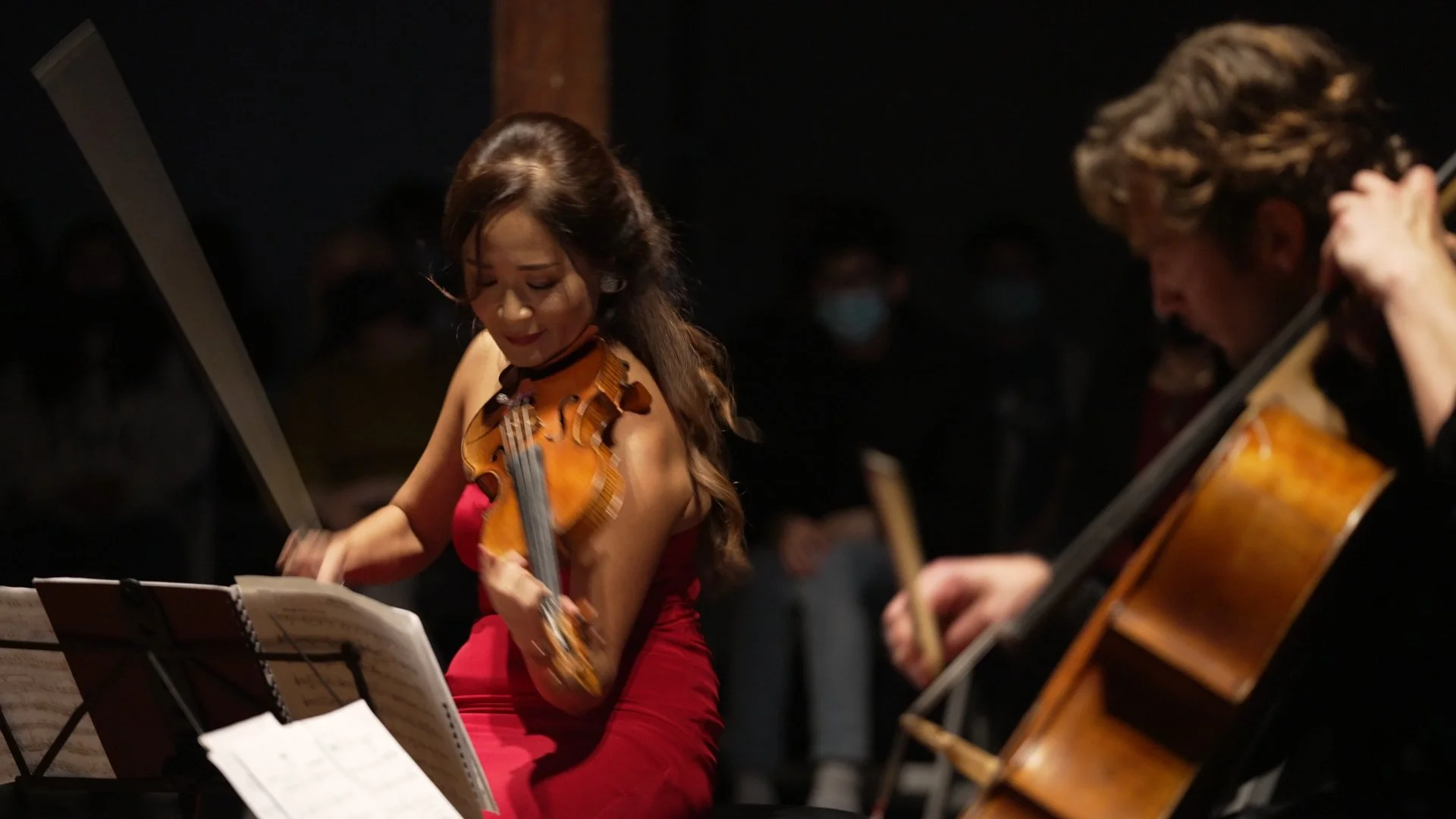
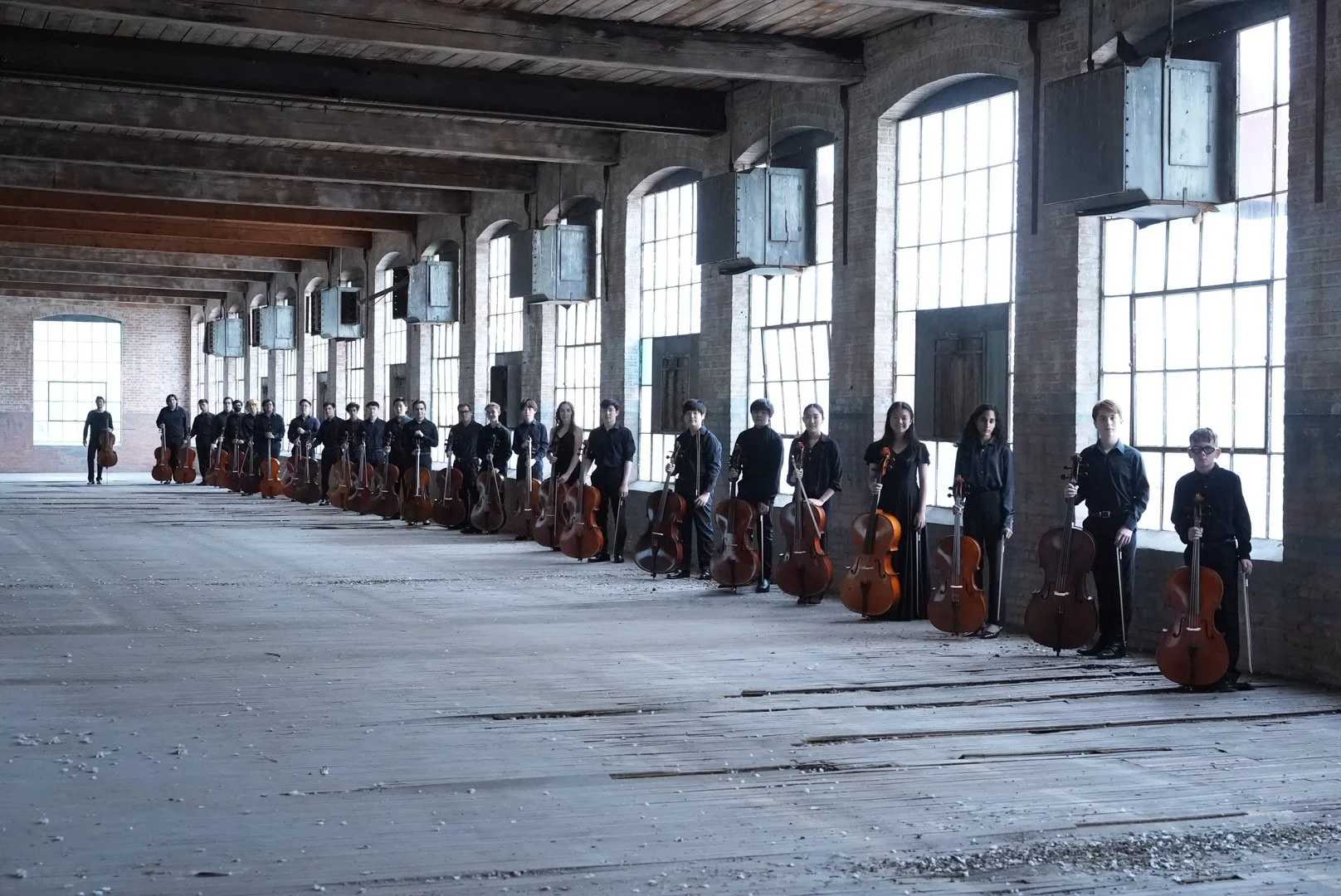
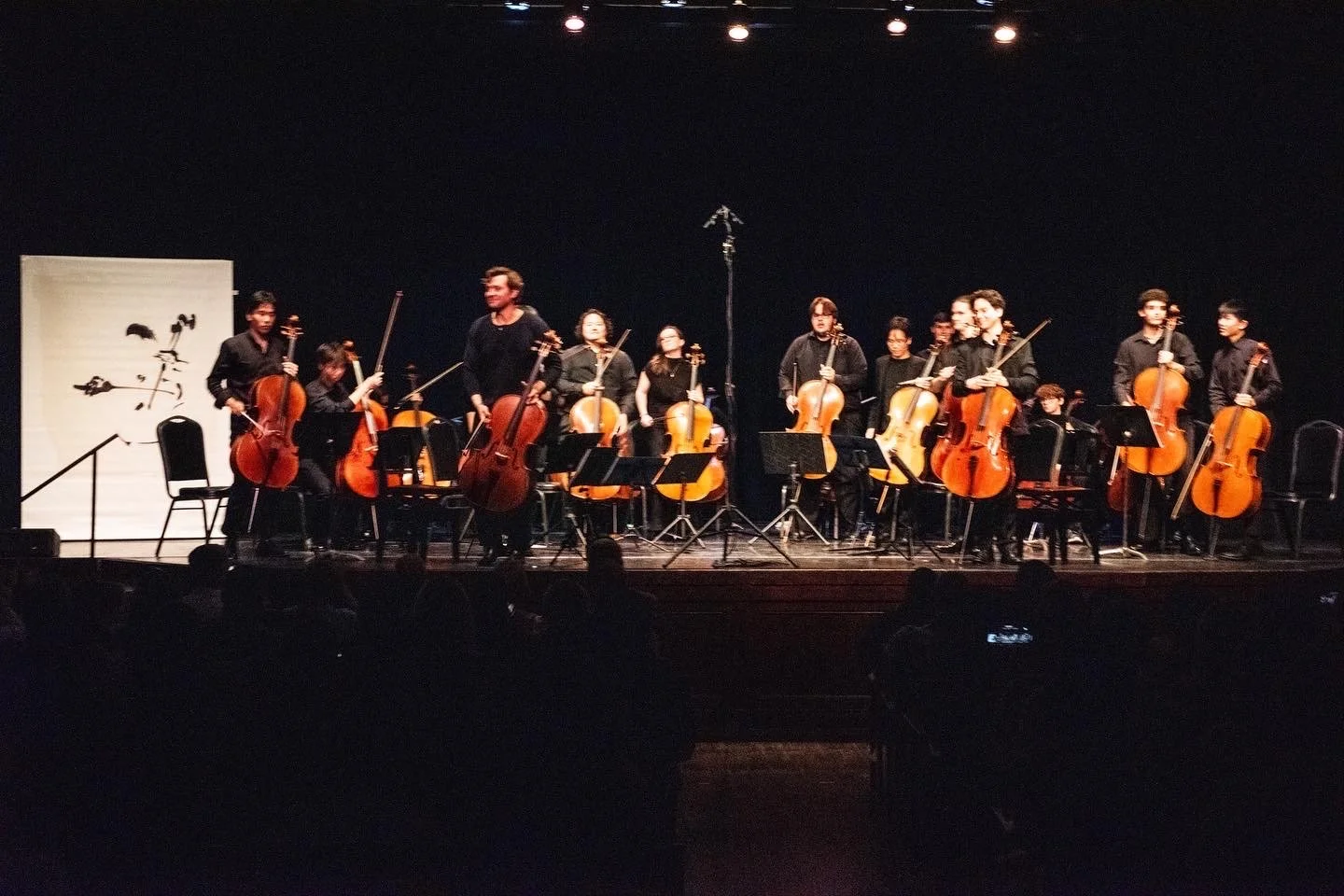
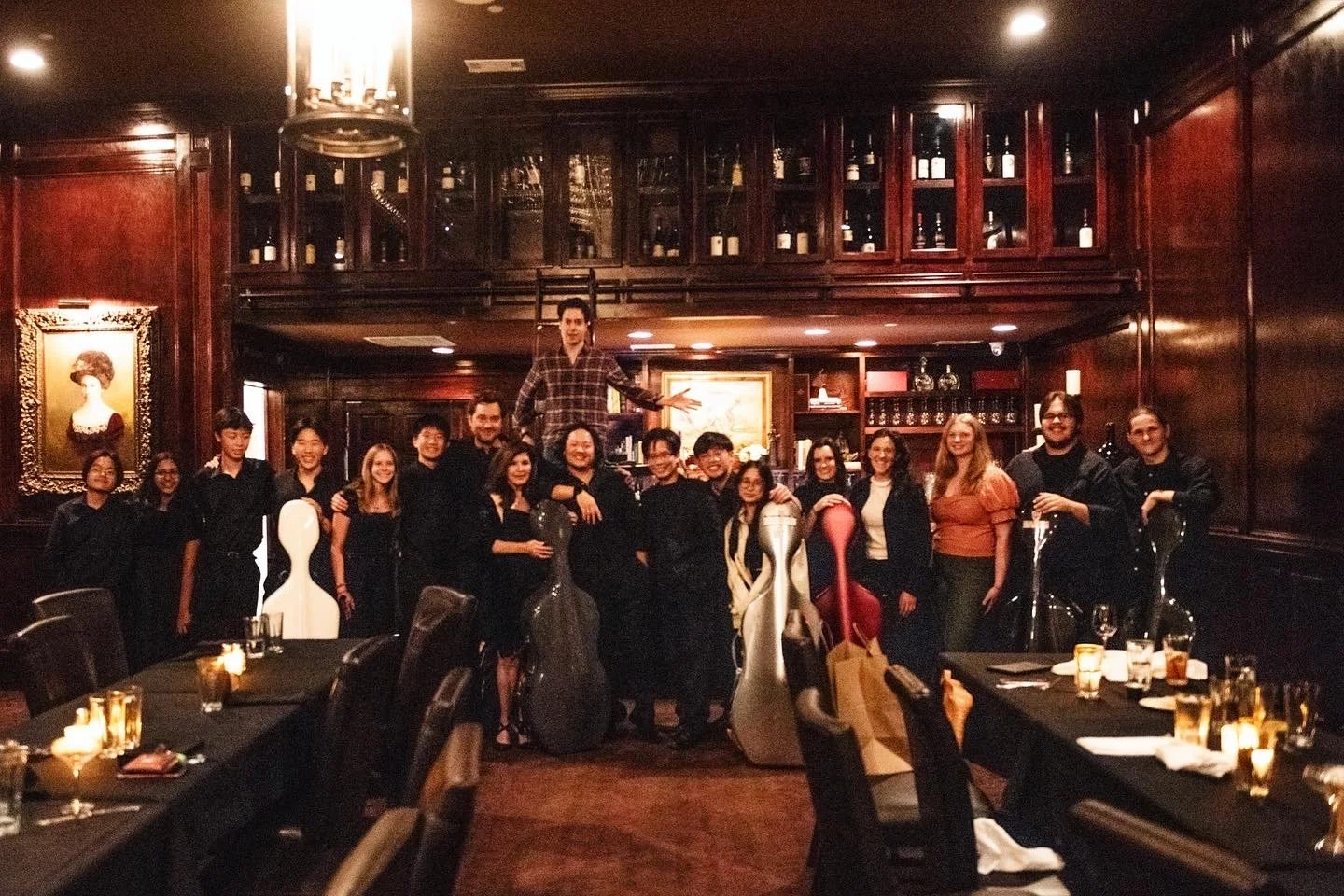
04 / REFLECTIONS
On music and beauty.
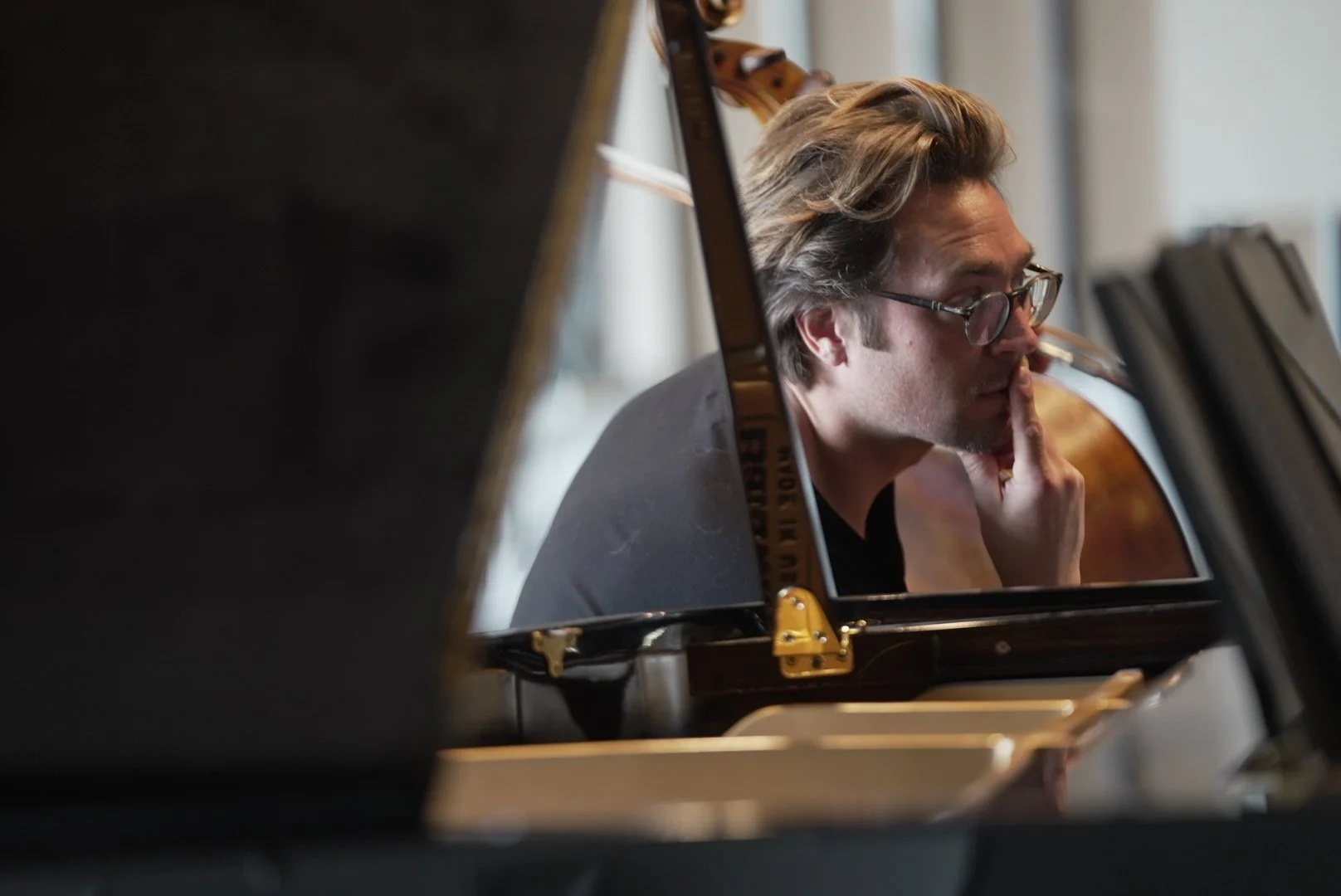
In the presence of beauty, we look up and out of ourselves.
Q: What are you searching for when you make music?
I'm not sure it's something I can fully put into words. There are moments, both in making music and listening to it, when everything comes together and there is an extraordinary sense of fulfillment, of wholeness.
It's less about doing something than simply being. We don't call ourselves human doings, but human beings.
For me, music can also be a kind of balm. It allows me to express things I might never be able to communicate otherwise. There is a freedom in that experience, a sense that, for a moment, everything is as it should be.
Q: What does beauty mean to you?
Beauty calls us to look up and out of ourselves, toward something much greater than we are. In its presence, we can forget who we are, and yet somehow become more fully ourselves.
I find something extraordinary in that paradox. Beauty takes us beyond ourselves, but at the same time, it can reveal something deeply human within us.
Q: What gives you the greatest satisfaction in teaching and creating musical experiences for others?
There is something extraordinary about watching another person encounter beauty for themselves.
The wonderful thing is that you can never really predict when or how that will happen. Human beings are infinitely complicated, particularly in relationship with one another. You cannot control those encounters.
You can prepare, create an environment, bring people together, and try to make something beautiful. But what happens between people, or between a person and a piece of music, is ultimately beyond your control.
I find that both humbling and deeply satisfying. We can give something of ourselves, but we have to leave room for the unexpected.
BEYOND MUSIC
Painting as another form of exploration.
An ongoing collection of abstract works.
05 / BIOGRAPHY
The artist today.
CELLIST · EDUCATOR · CREATIVE DIRECTOR
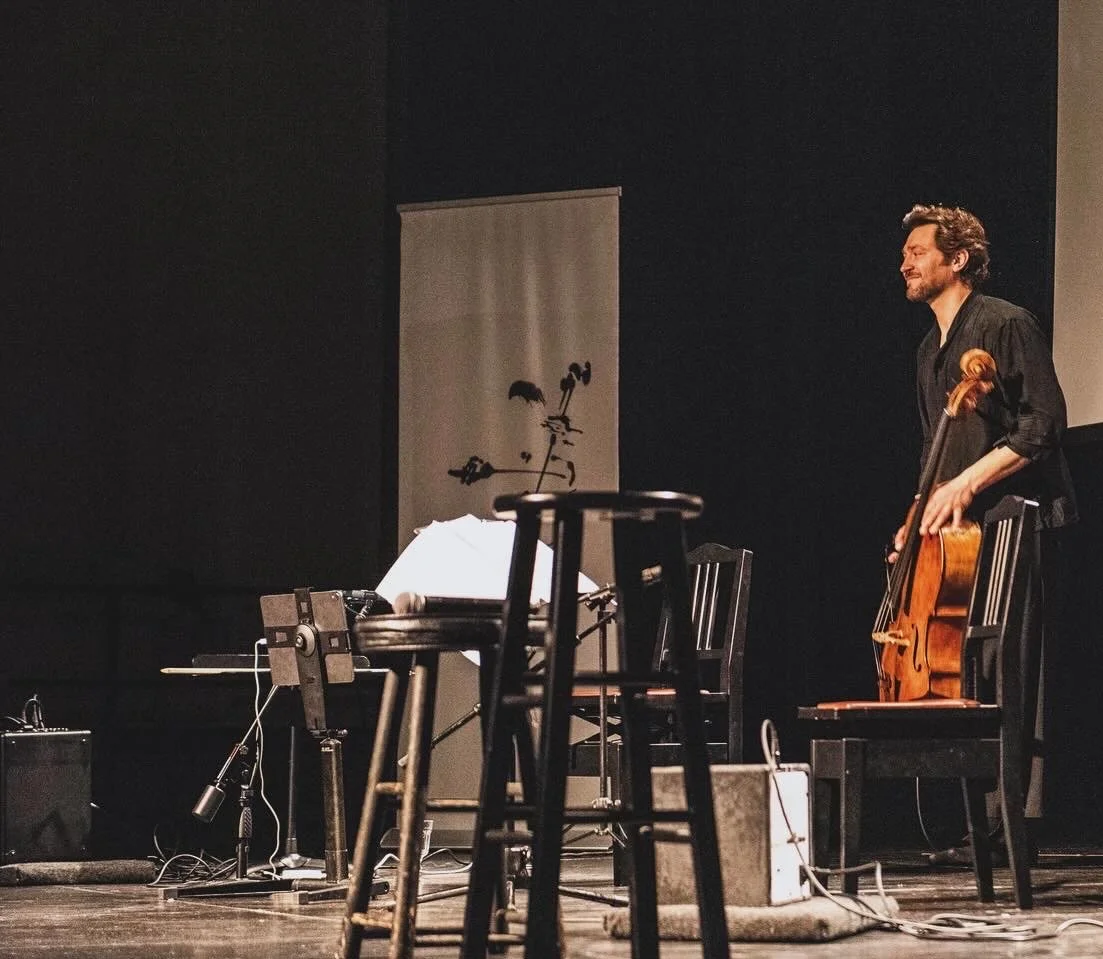
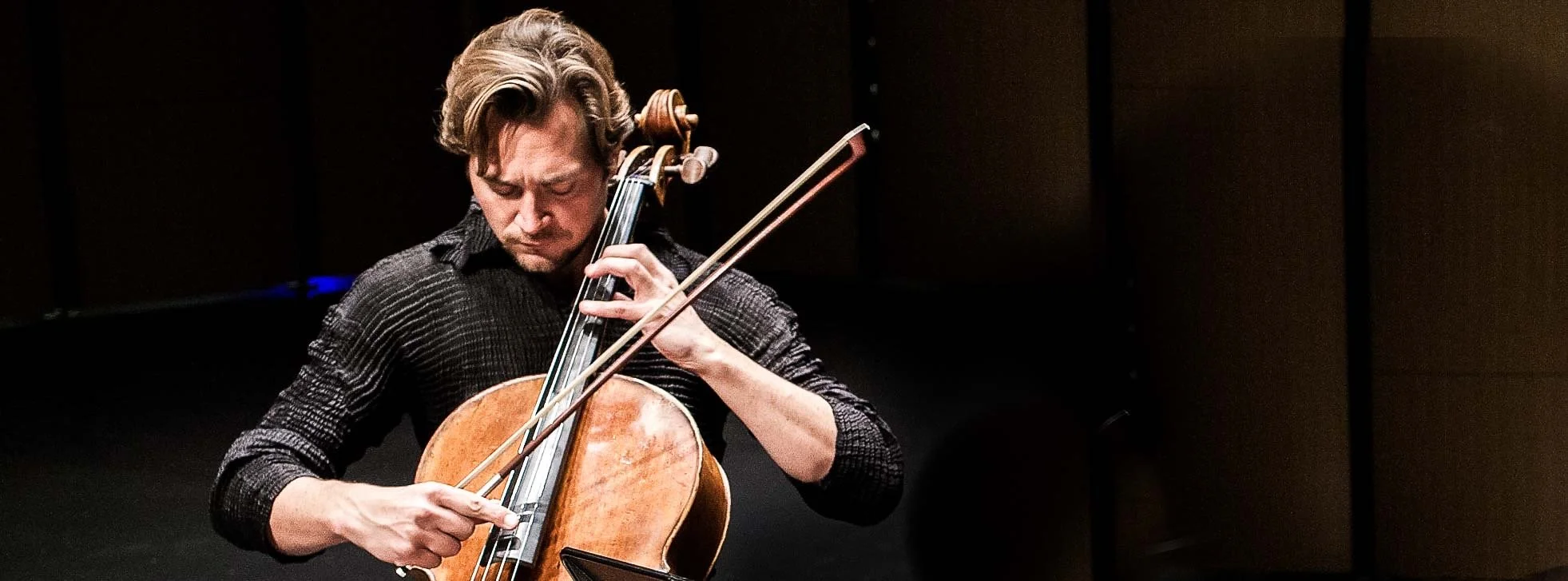
Joseph Kuipers
Curiosity, imagination, and an enduring fascination with sound shape the artistic work of American cellist Joseph Kuipers. His interests extend beyond the expressive possibilities of the cello to encompass musical interpretation, collaboration, and the relationships between musicians, audiences, and the spaces in which music is heard. His work reflects a continuing interest in the ways music brings people together and contributes to the cultural life of a community.
Raised in a musical family, Kuipers began performing chamber music and singing in choirs at an early age. The singing quality of the cello and the expressive possibilities of phrasing, color, and silence remain central to his approach to interpretation. His repertoire extends from early music to contemporary works, including lesser-known compositions, transcriptions, and unusual instrumental combinations.
His musical formation took place in the United States and Europe, where his primary teachers included Hong Wang, Paul Katz, Bernard Greenhouse, Michael Flaksman, Thomas Demenga, and Rainer Schmidt. His years in Basel were especially influential, bringing him into close contact with chamber music, historical performance, and contemporary composition.
Kuipers has appeared at Aspen, Ravinia, Domaine Forget, Kronberg Academy, and other international festivals. He has collaborated with the Miró, Dover, and Escher Quartets, as well as members of the Cleveland, Hagen, and St. Lawrence Quartets. His engagement with contemporary music has included close work with composers Robert Cogan, Heinz Holliger, Helmut Lachenmann, and Arvo Pärt.
An active educator, Kuipers has taught at universities and festivals in the United States and Europe and maintains a private cello studio in North Dallas.
He founded Texas Cellos in 2020 and the Fredericksburg Music Festival & School in 2025. Through these organizations, he brings together established musicians, young artists, and audiences in performances and educational programs that emphasize collaboration, artistic exploration, and community.
06/ CONNECT
Begin a conversation.
Music begins with listening, and meaningful things often begin with a conversation.
For performances, teaching, artistic collaborations, or new ideas, I welcome the opportunity to begin a conversation.